Panel fabrication · Shop to NYC jobsite
Shop fabrication of ACM wall panels
CNC-routed, folded, stiffened, and labeled aluminum composite trays built directly from your approved shop drawings—ready for your crew or ours to hang.
Call or text (929) 209-3122
Book spring work now. Winter assessments and estimates available.
Updated November 2026
AI-generated illustration
Short answer
We fabricate aluminum composite wall panels from approved shop drawings for general contractors and facade installers working in New York City. Sheets are sized and V- or U-grooved on a CNC router, folded into 1- to 2-inch route-and-return trays, fitted with corner angles, perimeter extrusions, and back stiffeners, then labeled by elevation and packed for tight city deliveries.
Key facts
- Service area
- All five boroughs of New York City: Manhattan, Brooklyn, Queens, the Bronx and Staten Island.
- Season
- Panel installation runs most of the year. Sealant joints and barrier work are done on dry, frost-free surfaces.
- Who does the work
- Our own crews, from The Dom Construction Group LLC.
- Insurance
- General liability, umbrella and workers' compensation insurance; certificates on request.
- Estimates
- Free. Start with 3–5 photos by text, or use the form.
- Reply
- We reply within one business day, Monday to Friday.
How a panel order moves through the shop
Built strictly to your approved, engineered shop drawings so field crews receive square, ready-to-hang trays.
Sheet nesting and grain check
Stock sheets are nested from the approved panel schedule while keeping metallic and mica PVDF directional arrows consistent.
CNC sizing and return grooving
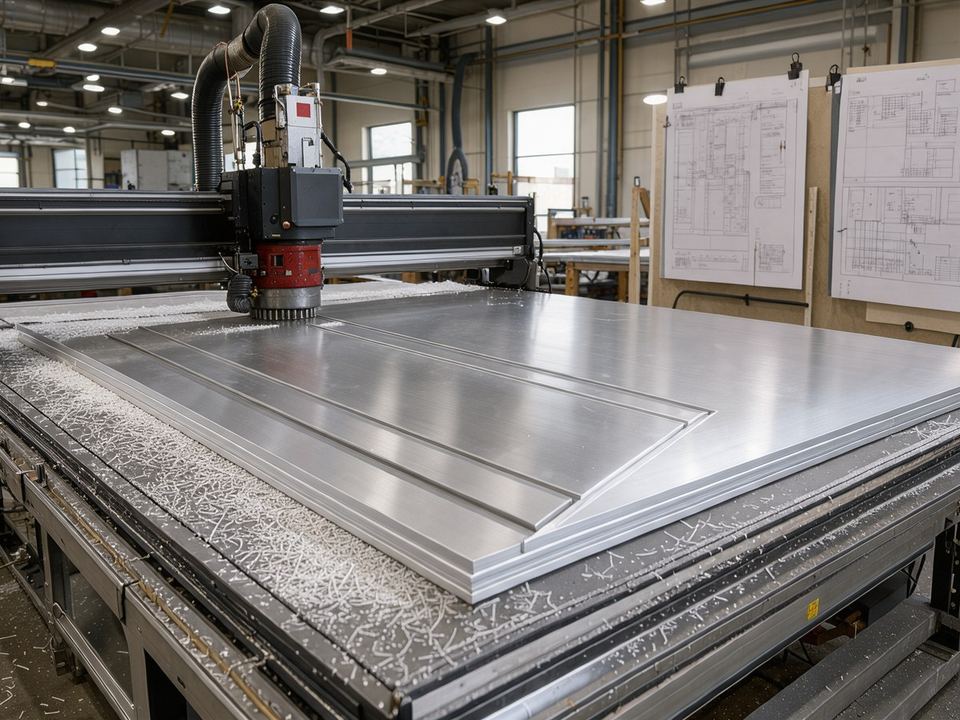
The router cuts perimeter profiles and mills clean V- or U-grooves through the rear skin and core without scoring the face skin.
Brake and hand folding
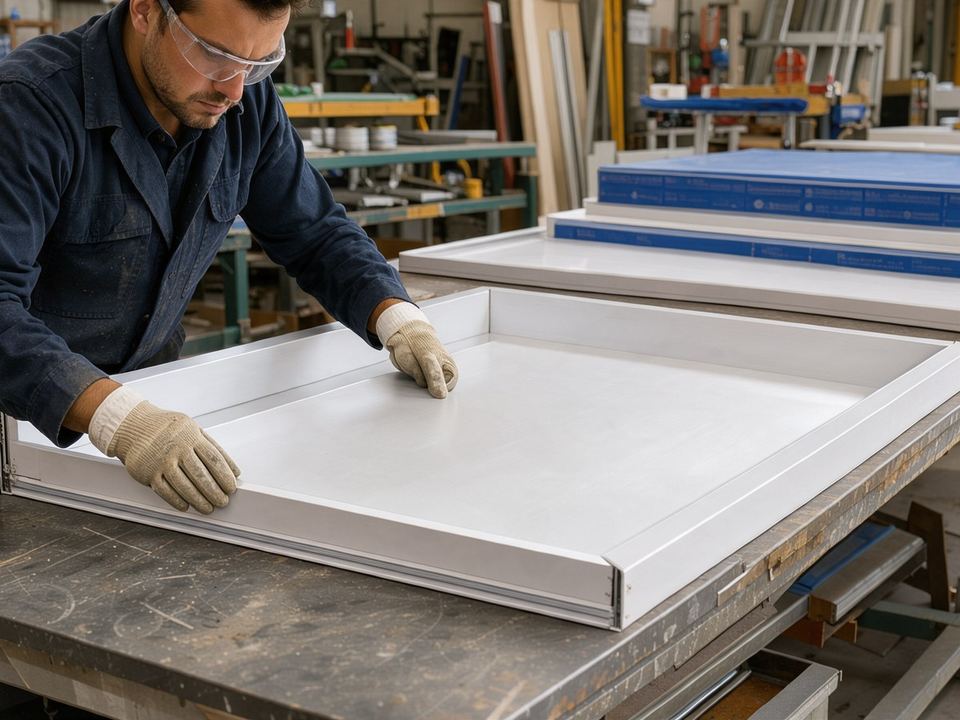
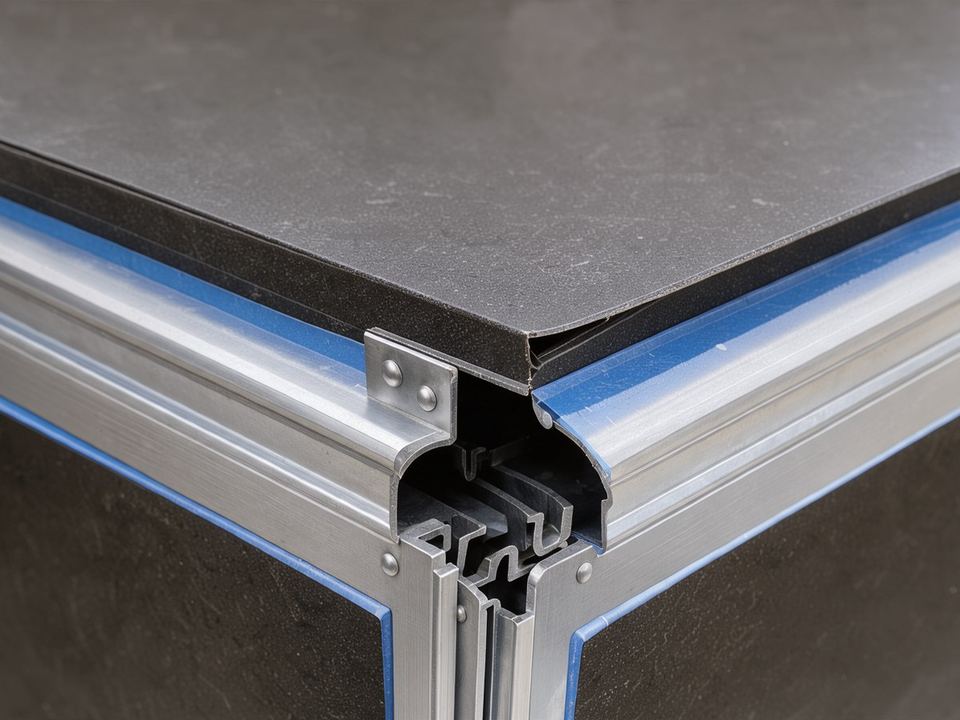
Returns are folded to 1 to 2 inches deep and corners are locked square with internal aluminum angles, rivets, or clips.
Hardware, labeling, and crating
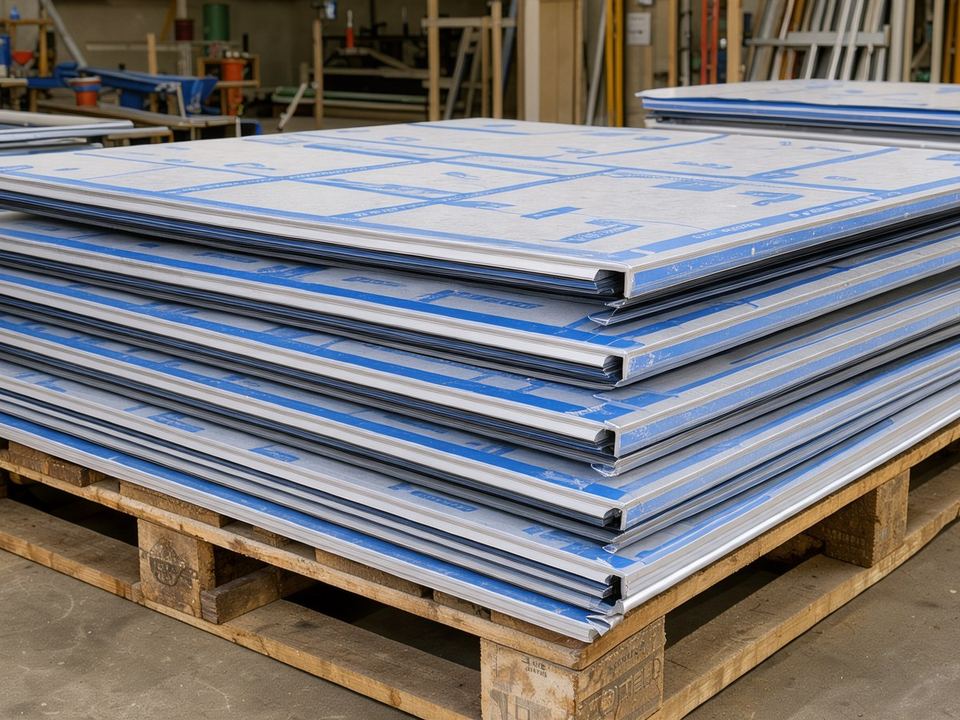
Perimeter extrusions, clips, and bonded back stiffeners go on, each tray gets its elevation mark, and pallets pack in drop order.
Route-and-return cutting tolerances and clean folds
Shop fabrication starts with approved shop drawings and verified panel schedules. Flat ACM panels—most commonly 4 mm sheets pairing two 0.020-inch aluminum skins over a mineral-filled FR or PE core, in widths up to roughly 60 inches—are nested on a CNC router table or precision panel saw so cut dimensions stay consistent across dozens or hundreds of repeating modules.
To form a route-and-return tray, the CNC router mills a V-shaped or U-shaped groove through the rear aluminum skin and nearly all of the core, stopping just short of the outer aluminum face skin. Leaving that front skin intact lets our shop fold each edge by hand or brake into a crisp 1- to 2-inch return flange without fracturing the factory PVDF coating along the corner radius. Once the four returns are turned up, corners are closed and mechanically locked with internal aluminum angles, rivets, or clips so the tray holds square during shipping and hoisting.
Extrusions, clips, and back stiffeners
After folding, each tray receives the attachment hardware detailed on the shop drawings. Panels destined for rainscreen systems are fitted with continuous perimeter extrusions, hook-on pins, or concealed rail clips along the returns. Panels built for wet-seal systems receive continuous or intermittent mounting tabs pre-punched or positioned for field fastening to sub-framing girts prior to joint caulking.
Wider spandrel modules, deep soffit pans, and tall fascia panels also get aluminum hat channels or angle stiffeners structurally bonded to the back skin. Following the stiffener spacing on the engineered shop drawings keeps broad composite faces flat under wind suction and positive pressure, preventing panel flutter and oil-canning on open city avenues.
Finish direction, protective film, and elevation labeling
Metallic, mica, brushed, and anodized-look fluoropolymer coatings have a subtle directional grain from coil coating. If two adjacent panels are rotated 90 or 180 degrees relative to one another, sunlight makes them look like two different colors on the facade. During CNC nesting, we track the directional arrows printed on the factory peel-off film from raw sheet layout all the way through assembly.
That protective film stays bonded to the face throughout routing, folding, and crating so router chips and handling do not mar the finish. Every completed tray is marked on the back and return with its elevation code and grid number from the shop drawing layout, then padded, wrapped, and stacked in erection order so NYC field crews can pull panels straight from the pallet without sorting crates on a tight curb lane.
Supplying panels by you or through our shop
We run fabrication-only packages for general contractors, curtain-wall installers, and exterior trades who want ready-to-hang composite trays or formed plate panels delivered in sequenced drops, and we also pair shop production with panel installation by our own crews. You can furnish raw sheets to our shop or have us procure the specified coil-coated stock.
All shop work follows approved, engineered shop drawings. We do not stamp engineering calculations or issue test certifications; if your contract requires third-party shop drawing engineering before fabrication, let us know during estimating so responsibilities and lead times are spelled out clearly. Submit drawings on our bid request page or call (929) 209-3122.
Routing, return folding, and staged panel stacks
AI-generated illustration
AI-generated illustration
AI-generated illustration
Panel fabrication questions
What depth are the folded returns on a fabricated ACM tray?
Most route-and-return composite wall panels are folded with perimeter returns between 1 inch and 2 inches deep, matching the extrusions, clips, or sealant joint depth shown on the approved shop drawings. A CNC router cuts a V- or U-groove through the rear skin and core so the outer aluminum skin bends cleanly without cracking.
Why do metallic ACM panels have directional arrows on the protective film?
Coil-coated metallic, mica, brushed, and anodized-look PVDF finishes carry a microscopic directional grain from factory application. If two adjacent panels are hung with arrows pointing in different directions, reflected daylight makes them look mismatched in shade. We maintain consistent arrow orientation during CNC nesting, folding, and elevation labeling.
When do fabricated composite panels need stiffeners on the back?
Wide spandrel panels, tall column wraps, and large soffit modules need aluminum hat-channel or angle stiffeners structurally bonded to the rear skin so wind loads do not bow the panel face or cause oil-canning. Stiffener layout and spacing follow the wind-load requirements detailed on the project's approved, engineered shop drawings.
Can we supply our own flat ACM sheets for your shop to route and fold?
Yes. We handle toll fabrication where the general contractor, owner, or installer furnishes flat coil-coated sheets along with approved shop drawings, and we perform CNC cutting, return routing, folding, corner assembly, clip attachment, and labeled crating. We can also source the specified sheets when you want material and shop labor combined.
How are fabricated trays packed for New York City jobsites with tight staging?
Each completed tray keeps its factory peel-off face film intact, receives a clear elevation and grid label matching the shop drawings, and is stacked with protective interleaving on pallets grouped by installation sequence. Phased pallet drops let city field crews hoist and hang active elevations without storing whole-building inventory on site.
Send shop drawings or takeoffs for fabrication pricing
Upload your panel schedule, approved shop drawings, or architectural sheets for a fabrication-only or full-package quote.
Field installation and panel assemblies
- Panel installation
Field crews to set girts and hang trays across all five boroughs.
- Wet-seal systems
Route-and-return trays prepped for backer rod and silicone sealant joints.
- Rainscreen systems
Panels fitted with perimeter extrusions and hook-on clips for ventilated walls.
- Bid request
Send Division 07 specs, panel schedules, and drawings for commercial pricing.
Need trays cut and folded for an upcoming NYC drop?
Book spring work now. Winter assessments and estimates available.