Wet-seal ACM · Face-sealed joints
Wet-seal route-and-return ACM systems
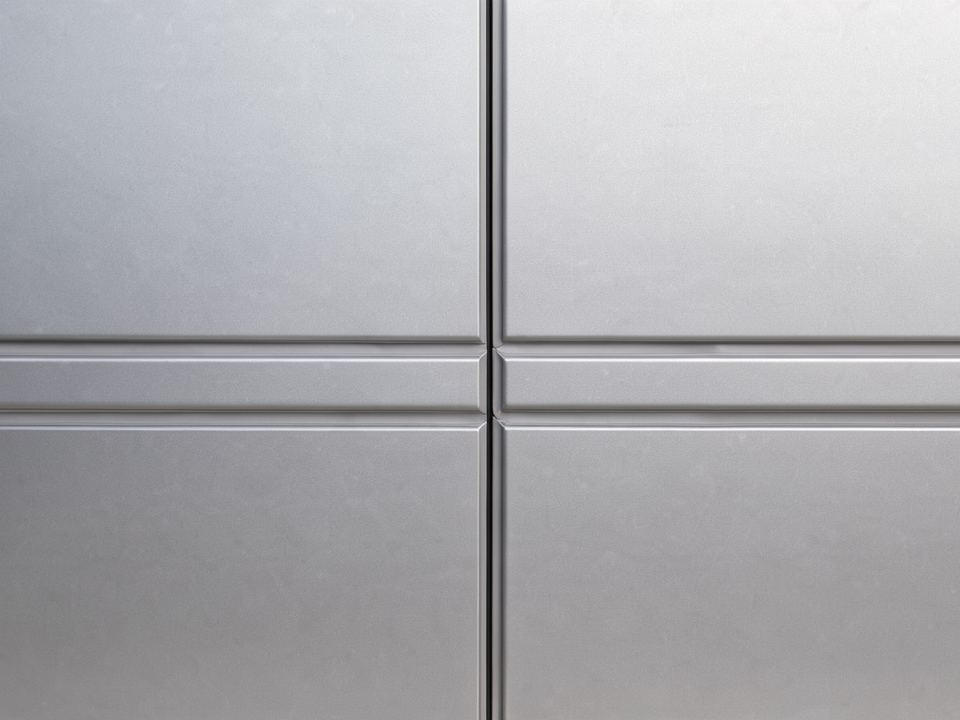
Classic route-and-return composite trays finished with backer rod and silicone sealant joints—widely used on canopies, fascia bands, bulkheads, and commercial facades.
Call or text (929) 209-3122
Book spring work now. Winter assessments and estimates available.
Updated November 2026
AI-generated illustration
Short answer
A wet-seal ACM system uses route-and-return panels set with roughly half-inch joints that are backed with closed-cell rod and sealed with architectural silicone. Acting as a face-sealed wall or soffit assembly over a secondary air and water barrier, wet-seal panels suit NYC canopies, storefront surrounds, sign bands, and low- to mid-rise facades where the drawings specify sealed reveals.
Key facts
- Service area
- All five boroughs of New York City: Manhattan, Brooklyn, Queens, the Bronx and Staten Island.
- Season
- Panel installation runs most of the year. Sealant joints and barrier work are done on dry, frost-free surfaces.
- Who does the work
- Our own crews, from The Dom Construction Group LLC.
- Insurance
- General liability, umbrella and workers' compensation insurance; certificates on request.
- Estimates
- Free. Start with 3–5 photos by text, or use the form.
- Reply
- We reply within one business day, Monday to Friday.
How route-and-return wet-seal joints work
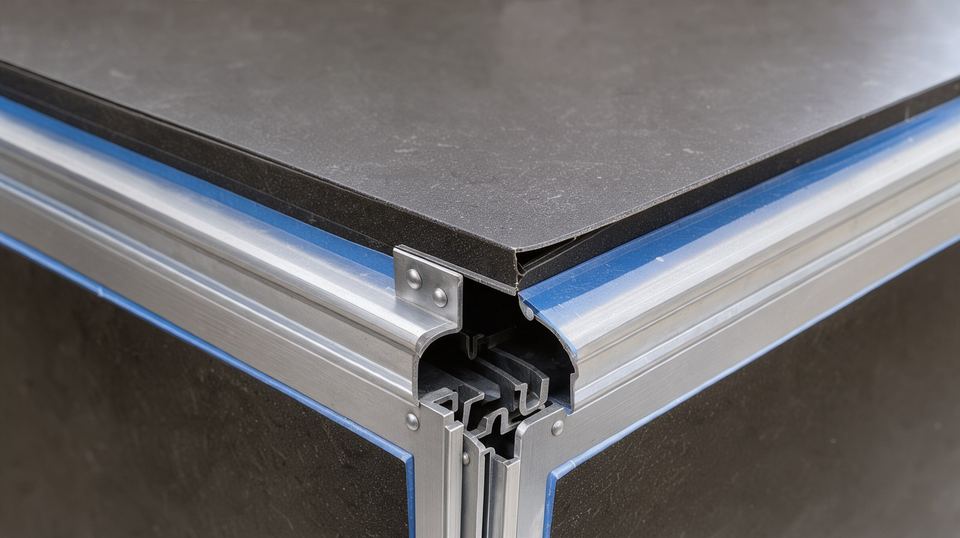
A wet-seal ACM panel system is a face-sealed cladding assembly built around route-and-return trays. During panel fabrication, flat sheets are CNC-grooved on the back and folded into rigid pans with 1- to 2-inch deep perimeter returns, closed corners, and continuous or intermittent fastening flanges.
In the field, our panel installation crews mechanically fasten those return clips or flanges to shimmed aluminum or steel sub-framing girts and hat channels, maintaining a consistent nominal joint—typically around 1/2 inch wide—between adjacent panels. Once a run of trays is aligned and secured, compressible backer rod is rolled into the reveal to control sealant depth, and low-modulus architectural silicone is gunned and tooled smooth across the gap so rain and wind stop at the outer panel plane.
Best uses: canopies, sign bands, and retail bases
Across Manhattan, Brooklyn, Queens, the Bronx, and Staten Island, architects and general contractors routinely specify wet-seal composite panels on entrance canopies, exterior soffits, ground-floor retail storefront surrounds, illuminated fascia sign bands, bank and pharmacy portals, rooftop bulkhead wraps, and low- to mid-rise commercial facades.
Wet-seal framing often carries a slimmer wall buildup than deep rail-mounted assemblies, making it helpful along tight NYC lot lines, existing steel canopy outriggers, and storefront transoms where projection depth is restricted. On horizontal canopy roofs-to-fascia transitions, sloped eyebrow trims, and overhead soffits where unsealed reveals could let wind-driven water drip onto pedestrians at glass entry doors, continuous silicone joints keep joints closed tight.
Backer rod geometry, non-staining silicone, and film timing
Long-lasting wet-seal joints come down to joint preparation and silicone chemistry. Sealant must form a proper hourglass profile bonded strictly to the two opposing aluminum return walls without bonding to a hard rear metal surface; three-sided adhesion prevents the joint from stretching cleanly when dark aluminum panels heat up in summer sun and contract in winter cold.
Handling the factory peel-off film correctly is equally critical. Before gunning any caulk, installers pull or trim the protective film back slightly from every panel return edge so primer (where specified) and silicone bond directly to bare PVDF-coated aluminum rather than sitting on top of plastic film that will peel away later. We apply non-staining architectural silicones formulated for metal cladding so plasticizer bleed does not leave dark streaks or dust rings along light metallic or matte finishes.
Wet-seal barrier walls versus drained rainscreens
Even though a wet-seal facade sheds water at the outer sealant line, commercial wall sections still place a continuous waterproofing air and water barrier plus metal head, sill, and base flashings behind the girts as secondary protection against incidental leaks or aging caulk.
On taller commercial elevations where owners want to eliminate exposed panel-to-panel caulk joints and future resealing cycles, architects often specify dry-joint rainscreen systems instead. Many buildings combine both—using rainscreen panels on upper floors and wet-seal ACM or heavy plate panels at canopies and street-level surrounds. Compare system anatomy at what ACM is or submit drawings on our bid request page.
AI-generated illustration
Wet-seal panel system questions
How wide are typical sealant joints in a wet-seal ACM wall?
Most route-and-return wet-seal ACM facades and canopies use nominal 1/2-inch wide panel-to-panel joints, though exact reveal widths follow the architectural details and shop drawings. A half-inch joint gives room for thermal expansion of the aluminum panels and allows silicone sealant to stretch and compress without tearing.
Why is closed-cell backer rod needed behind the silicone sealant?
Backer rod sets the correct hourglass depth of the wet-seal bead and prevents the silicone from bonding to metal framing at the back of the reveal. Without backer rod, three-sided adhesion locks the center of the caulk bead, causing premature splitting when panels expand and contract with seasonal temperature swings.
Does a wet-seal panel wall still require an air and water barrier behind it?
Yes. Even though wet-seal silicone joints turn away rain at the outer panel face, commercial wall assemblies still include a continuous air and water barrier plus metal head and sill flashings over the backup sheathing. That secondary plane protects the building if a sealant bead is punctured or ages years later.
How do you prevent silicone joints from leaving dark streaks on metal panels?
Fluid migration from low-grade sealants can bleed into porous dust and leave dark oil halos along panel edges, especially on light silver or matte PVDF finishes. Installing non-staining architectural silicone specified for metal facades—and bonding it directly to clean bare return edges rather than over plastic film—prevents streaking.
Where do architects usually prefer wet-seal ACM over open-joint rainscreens?
Wet-seal assemblies are common on entrance canopies, overhead soffits, storefront surrounds, fascia sign bands, and shallow-depth renovations where tight lot lines limit framing projection or where open joints overhead could allow wind-blown rain drips above doorways. Taller main facades more often step up to ventilated rainscreen systems.
Price a wet-seal canopy, storefront, or facade
Send your architectural sections and elevations—we price install-only, fabricate-only, or both.
Compare systems and related envelope work
- Rainscreen systems
Dry-joint and open-joint ACM panels with ventilated drainage cavities.
- Waterproofing
Secondary air-water barriers, flashings, and architectural joint sealants.
- Panel fabrication
CNC-routed, folded trays prepped for wet-seal clip and girt fastening.
- What is ACM?
Core types, aluminum skin thickness, finishes, and joint comparisons.
Bidding a sealed-joint ACM package in NYC?
Book spring work now. Winter assessments and estimates available.