NYC ACMACM FABRICATION & INSTALLATION (home) Call or text (929) 209-3122 Free estimate

Cement stucco · Five Boroughs

Commercial cement stucco repair and installation in NYC

New three-coat portland cement stucco, delamination cut-outs and breathable facade refinishing for New York City commercial and mixed-use buildings.

Call or text (929) 209-3122

Book spring work now. Winter assessments and estimates available.

Updated November 2026

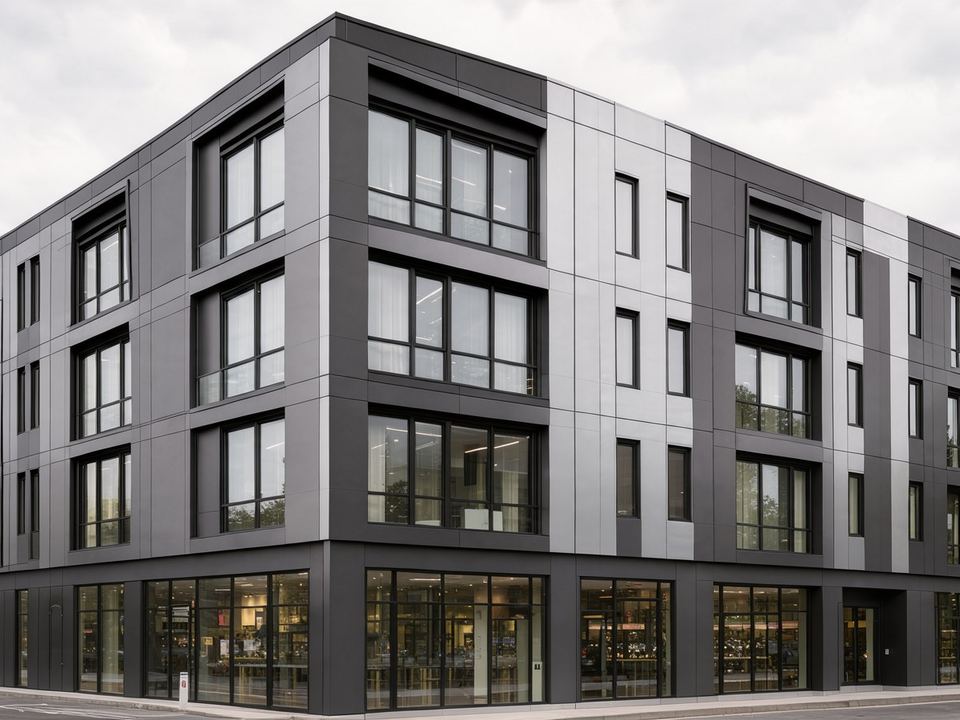
AI-generated illustration: finished metal panel facade on a city building

AI-generated illustration

AI-generated illustration: finished commercial mid-rise facade in New York City

Short answer

We apply new three-coat portland cement stucco, cut out and patch cracked or delaminated sections, and refinish weathered stucco on commercial and mixed-use buildings across the five boroughs. Our field team brings about 19 years of experience in EIFS, stucco, masonry, and coatings, and works directly from our own supported scaffold. Send photos or drawings for a free estimate.

Key facts

Service area
All five boroughs of New York City: Manhattan, Brooklyn, Queens, the Bronx and Staten Island.
Season
Panel installation runs most of the year. Sealant joints and barrier work are done on dry, frost-free surfaces.
Who does the work
Our own crews, from The Dom Construction Group LLC.
Insurance
General liability, umbrella and workers' compensation insurance; certificates on request.
Estimates
Free. Start with 3–5 photos by text, or use the form.
Reply
We reply within one business day, Monday to Friday.

Portland cement stucco for NYC commercial and mixed-use walls

Hard portland cement stucco handles mechanical bumps, street-level foot traffic, and dense urban exposure on retail bases, courtyard elevations, parapets, mixed-use apartment exteriors, and institutional buildings. Unlike hollow-sounding foam-backed EIFS, cement stucco is a dense mortar cladding keyed into metal lath or bonded directly to concrete block and poured concrete.

NYC ACM Panels performs commercial stucco alongside our ACM panels and facade waterproofing packages across Manhattan, Brooklyn, Queens, the Bronx, and Staten Island, plus nearby Westchester and Nassau buildings by arrangement. As part of The Dom Construction Group LLC—serving the five boroughs from our Albany office—our field team brings about 19 years of experience in EIFS, stucco, masonry, and coatings.

New three-coat lath stucco and direct-applied masonry builds

Crack resistance in new cement stucco comes from proper drainage, joint spacing, and curing time between lifts rather than rushing finish coats over green mortar. On framed commercial walls, we follow the project specifications for a full three-coat assembly:

  • water-resistive barrier and drained rainscreen mat or two-layer building paper lapped shingle-style to shed bulk moisture
  • corrosion-resistant galvanized or stainless metal lath, weep screeds at base terminations, casing beads around openings, and expansion or control joints dividing large wall areas into balanced panels
  • scratch coat forced fully through the lath and horizontally scored for mechanical key
  • brown coat rodded plumb and flat to establish true wall planes, then moist-cured before finishing
  • cementitious sand-float, dash, or smooth finish coat, or an elastomeric acrylic finish applied after proper mortar cure and pH check

Over clean, sound, unpainted CMU block or cast concrete walls, we also apply two-coat cement stucco using specified bonding agents or scratch-and-brown mortar lifts.

Sounding, cutting out and patching delaminated stucco

When water gets behind open parapet copings, unsealed window perimeters, or rusted corner beads, freeze-thaw cycles break the bond between stucco coats or corrode the lath behind the mortar. Tapping the wall reveals hollow pockets long before chunks fall loose.

Our mechanics sound the elevation, saw-cut neat rectangular perimeters back to solid material, inspect the substrate and lath, correct the flashing defect feeding the leak, and rebuild the patch in matching mortar lifts. On older masonry walls, we match mortar hardness rather than forcing an overly rigid cement mix onto softer brick or lime-rich backing, which would trap moisture and shear loose.

Breathable refinishing and clean panel-to-stucco joints

Weathered stucco elevations with map cracking or mismatched past patches often benefit from a full skim and breathable mineral or elastomeric facade coating that unifies color without sealing vapor inside the wall. Where stucco terminates against plate panels, aluminum storefront frames, or composite sign bands, we set casing beads with proper sealant joints—never mortar packed tight against aluminum—so thermal movement does not crack the edge.

Our own insured crew works directly from company-owned pipe and frame scaffolding, and TDCG is registered on the New York State public work contractor registry. Send photos or drawings through our bid request page or call (929) 209-3122.
Stucco defects we diagnose on commercial buildings

Typical cracking, debonding and transition problems on cement plaster facades.

Hollow-sounding or bulging plaster panels

Tapping the facade produces a drum-like sound instead of a solid ring.

Usually means
Water entry corroding metal lath or breaking the mechanical key between scratch, brown and masonry layers.
What we do
Saw-cut back to firmly bonded stucco, repair substrate and lath, fix overhead flashing and rebuild in three coats.

Diagonal cracks off window and storefront corners

Stepped or angled cracks radiating from square wall openings.

Usually means
Shrinkage and building movement concentrated at corners where control joints were omitted.
What we do
Route or cut relief lines where needed, install proper casing or control beads, and patch or recoat the bay.

Cracked mortar packed tight against aluminum

Crumbling edges where stucco meets metal panels, coping trims or window frames.

Usually means
Mortar troweled directly against aluminum with no casing bead or movement joint.
What we do
Cut back mortar, set a corrosion-resistant casing stop and install backer rod with low-modulus sealant.

Spalling patches on older brick backing

Previous repairs lifting loose in thick rigid slabs.

Usually means
Overly hard portland mix trapping moisture against softer historic brick or lime-rich mortar.
What we do
Remove stiff patches, clean masonry substrate and rebuild using a compatible mortar strength and breathable finish.

Commercial cement stucco questions

How can you tell at grade whether a facade is cement stucco or EIFS?

Knocking lightly on the wall gives an immediate clue: portland cement stucco is dense mortar roughly 3/4 to 7/8 inch thick over lath or masonry and sounds solid like stone, whereas EIFS places thin mesh-reinforced base coat over foam board and sounds hollow. Probing a discreet termination edge confirms the exact buildup before repair pricing.

Why do new three-coat cement stucco walls need control joints and curing time?

Portland cement mortar shrinks slightly as hydration water leaves the mix. Dividing large wall areas into smaller panels with metal control joints—especially aligned with window and door corners—gives shrinkage stress a planned relief line, while proper moist curing between scratch, brown, and finish coats prevents spiderweb cracking and weak bond.

What causes older commercial stucco to bulge or sound hollow?

Hollow or bulging sections usually mean water entered through cracked parapet caps, open window caulk, or unsealed wall penetrations and broke the key between coats or rusted the metal lath behind the mortar. Repeated winter freeze-thaw cycles expand trapped water until a whole sheet of stucco detaches from its backing.

Why shouldn't hard cement patches go directly onto soft historic masonry?

Dense, high-portland mortar expands differently under temperature swings and blocks vapor movement much more than older softer brick or lime-blended substrates. When a stiff patch sits over a softer backing wall, moisture collects right behind the repair plane and winter freezing pops the new patch off, often pulling face brick with it.

How should cement stucco terminate where it meets aluminum panels or windows?

Cement mortar is alkaline and shrinks slightly during cure, so troweling stucco directly against aluminum frames or panel returns corrodes finishes and opens a hairline gap that leaks immediately. Stucco edges belong inside corrosion-resistant casing beads set back from the adjacent metal frame to leave a proper backer-rod-and-sealant joint.

Send stucco photos or drawings for free pricing

Share close-up and full-wall photos for repair estimates, or upload architectural drawings for new stucco packages.

Rather text? Text photos to (929) 209-3122

What are you seeing? (optional)
Add details (optional)
Property (optional)
How soon? (optional)
Best way to reply (optional)
Photos (optional, up to 5)

Add 3–5 photos: one close-up and one of the whole wall. We shrink them before sending.

    required. We reply within one business day, Monday to Friday. We use your details only to reply to this request. Privacy

    Rather text?

    (929) 209-3122

    Call or text Monday–Friday, 7 AM–5 PM.

    Other plaster, barrier and panel wall scopes

    Have hollow stucco or a new three-coat spec to price?

    Book spring work now. Winter assessments and estimates available.